

Quick Links
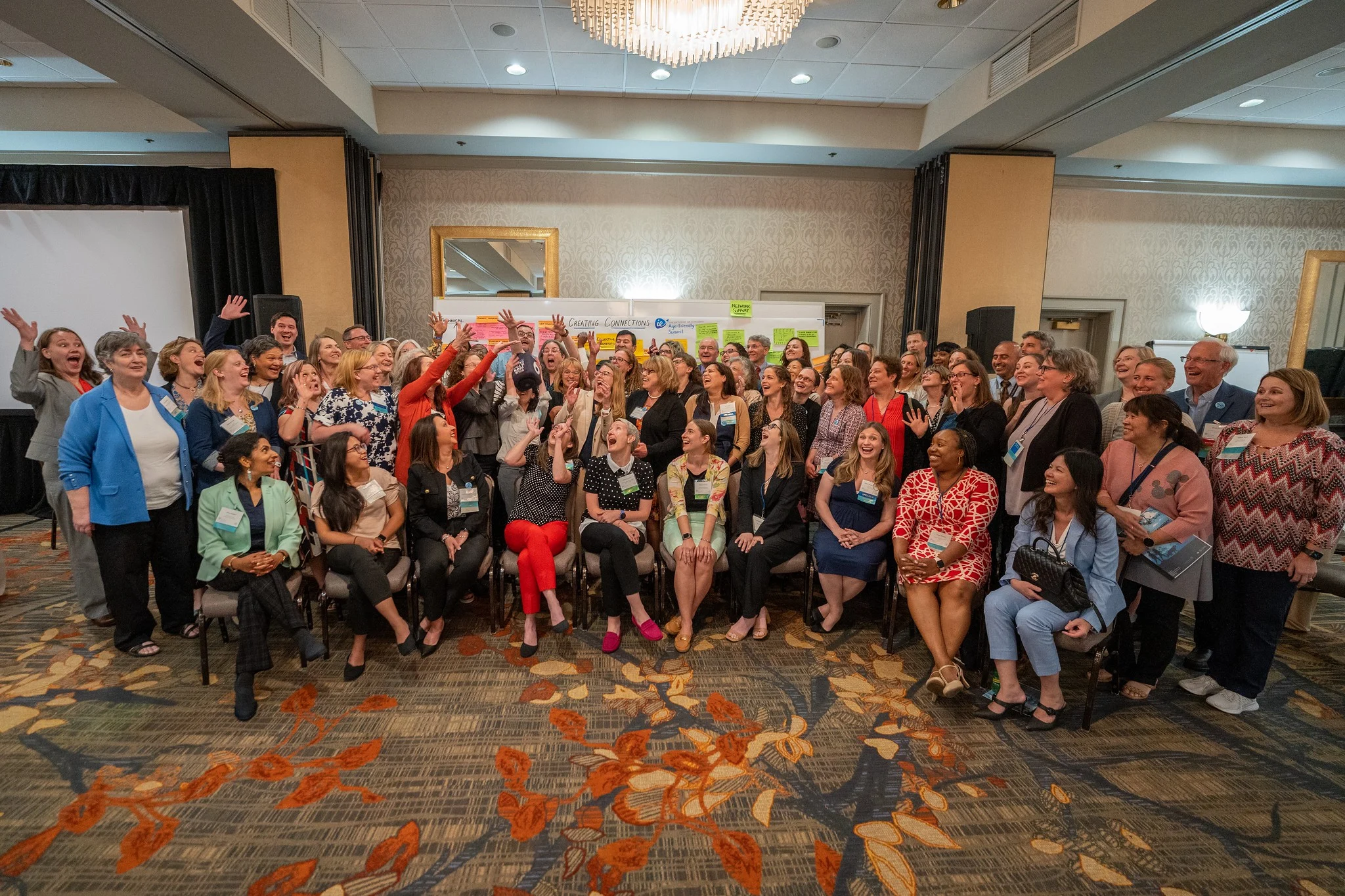
We partnered with the VHA Diffusion of Excellence to design and facilitate the Age-Friendly Summit, bringing together frontline staff from every Veterans Integrated Service Network to accelerate adoption of the Age-Friendly Health Systems (AFHS) movement.
The goal was to improve care for older veterans by putting the 4Ms — What Matters, Medication, Mentation, and Mobility — into practice. Just as important to the organizers: participants needed to leave feeling like a genuine community of practice, ready to co-design the movement’s future together.
what we did
- Emceed and designed the two-day Age-Friendly Summit
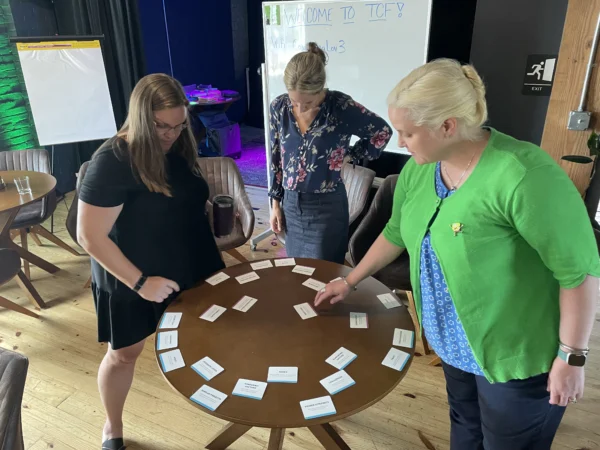
- Engaged the audience in connection-building sessions and ecosystem mapping activities to fully understand the existing landscape
- Organized a consensus-building process to align on shared priorities
- Formed working groups with named leaders, timelines, and a five-year scale-up plan
how we did it
Building a community before building a plan
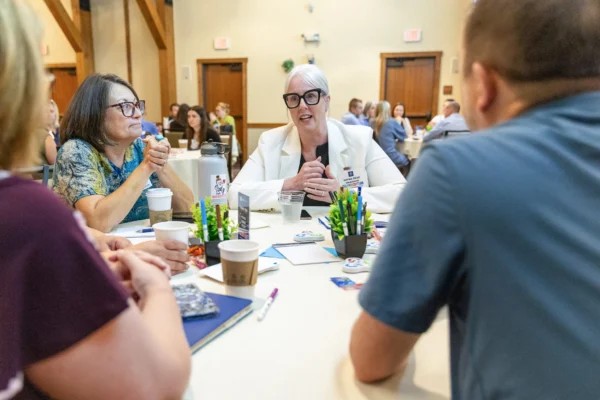
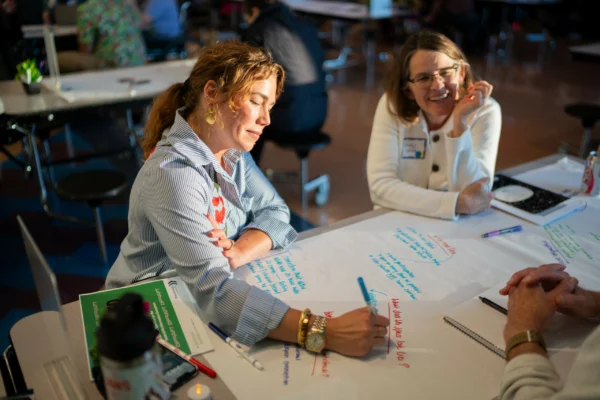
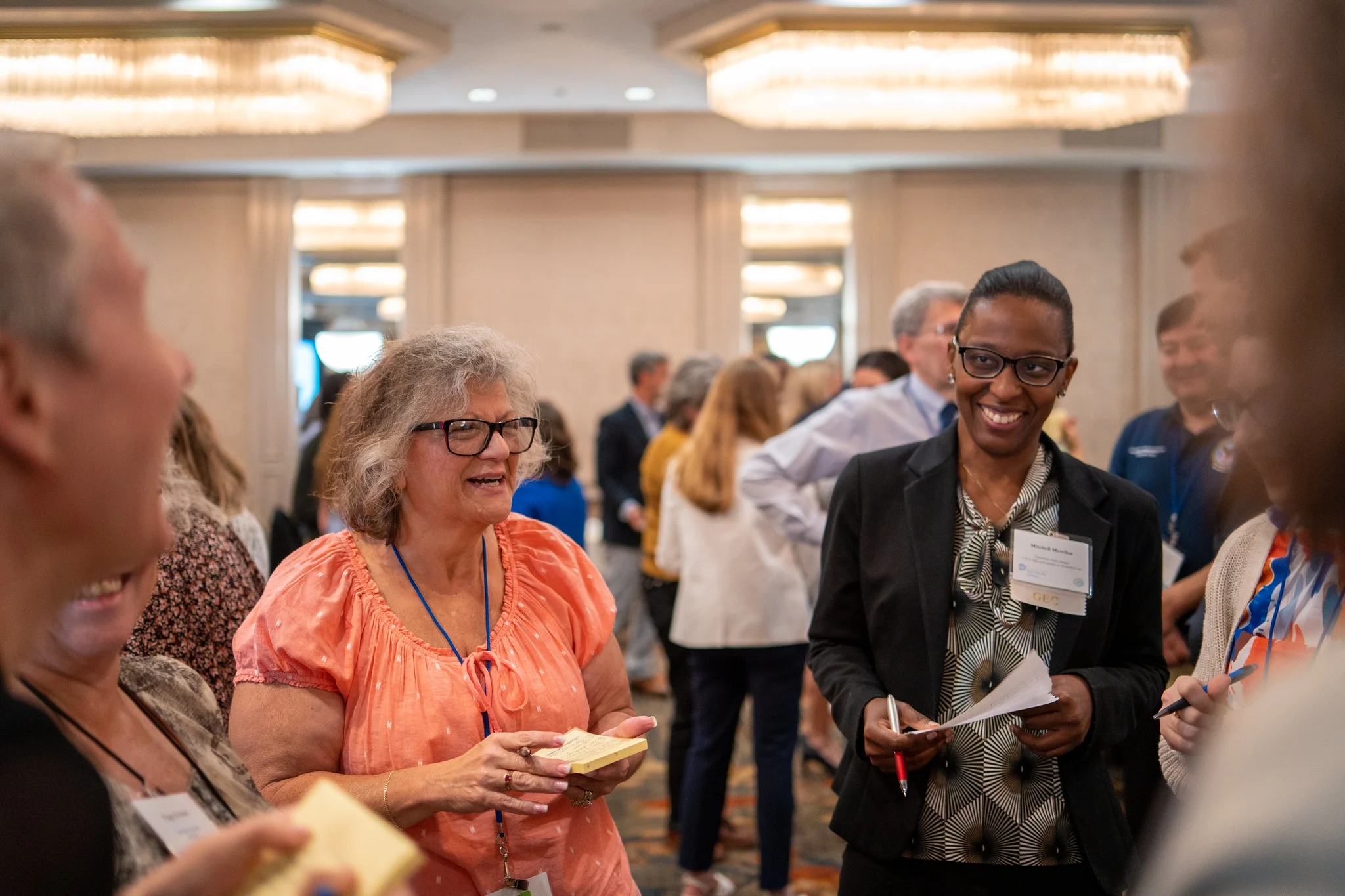
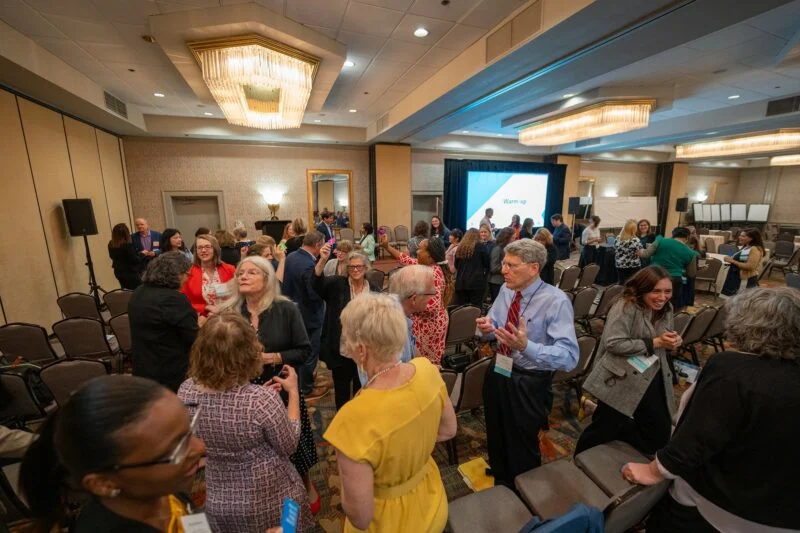
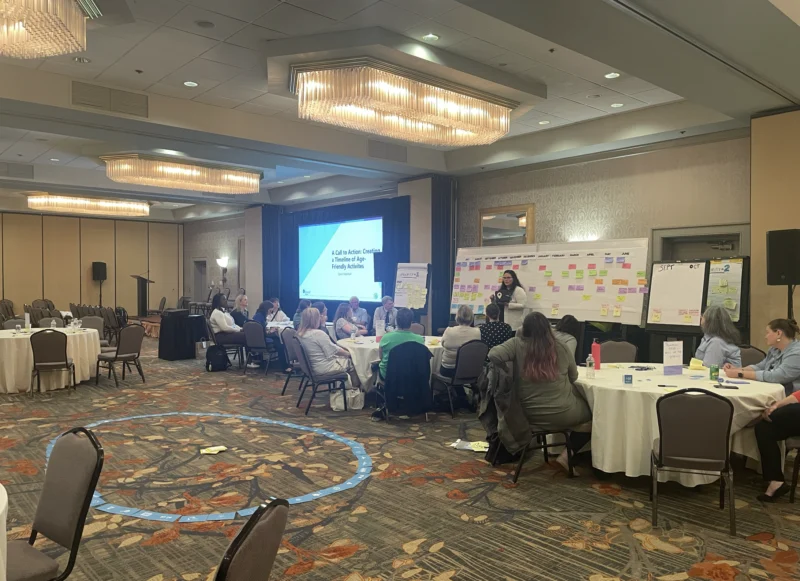
We opened as emcee with a question swap that got participants genuinely knowing one another. This was critical because the organizers wanted to form a community of practice, not just an audience. That energy carried into three rounds of World Café themed around “Creating Connections: Engaging All Care Settings in the Age-Friendly Health Systems Movement,” where participants shared personal insights, named the conversations that could move the movement forward, and explored how to support each other’s bold steps. After each round, they distilled takeaways onto boards we organized by theme.
From “more task forces” to “more doers”
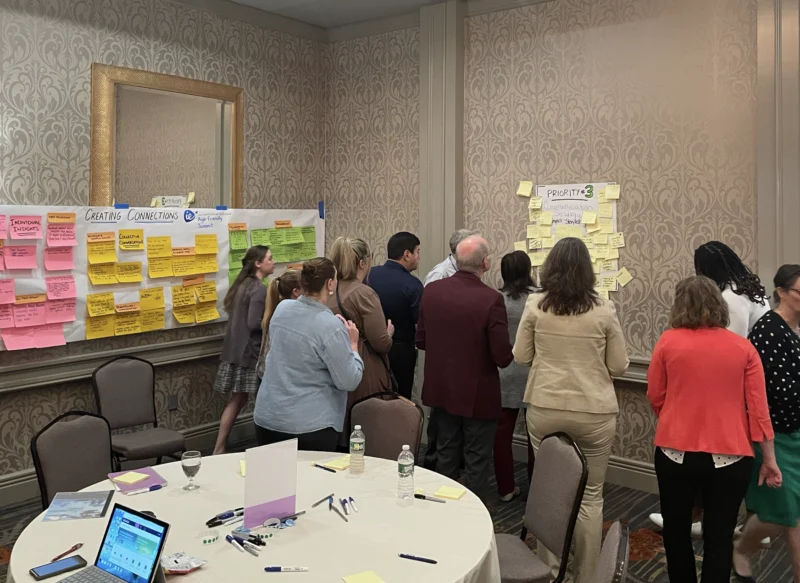
The room was clear about what it didn’t want: as one participant put it, “Age friendly does not need more task forces — we need more doers!” So we moved fast from talk to focus. A facilitated process allowed the room to build consensus on priorities which were mapped onto banners around the room for a real sense of shared ownership.
Behind-the-scenes look at the summit
Designing, then choosing, the best ideas
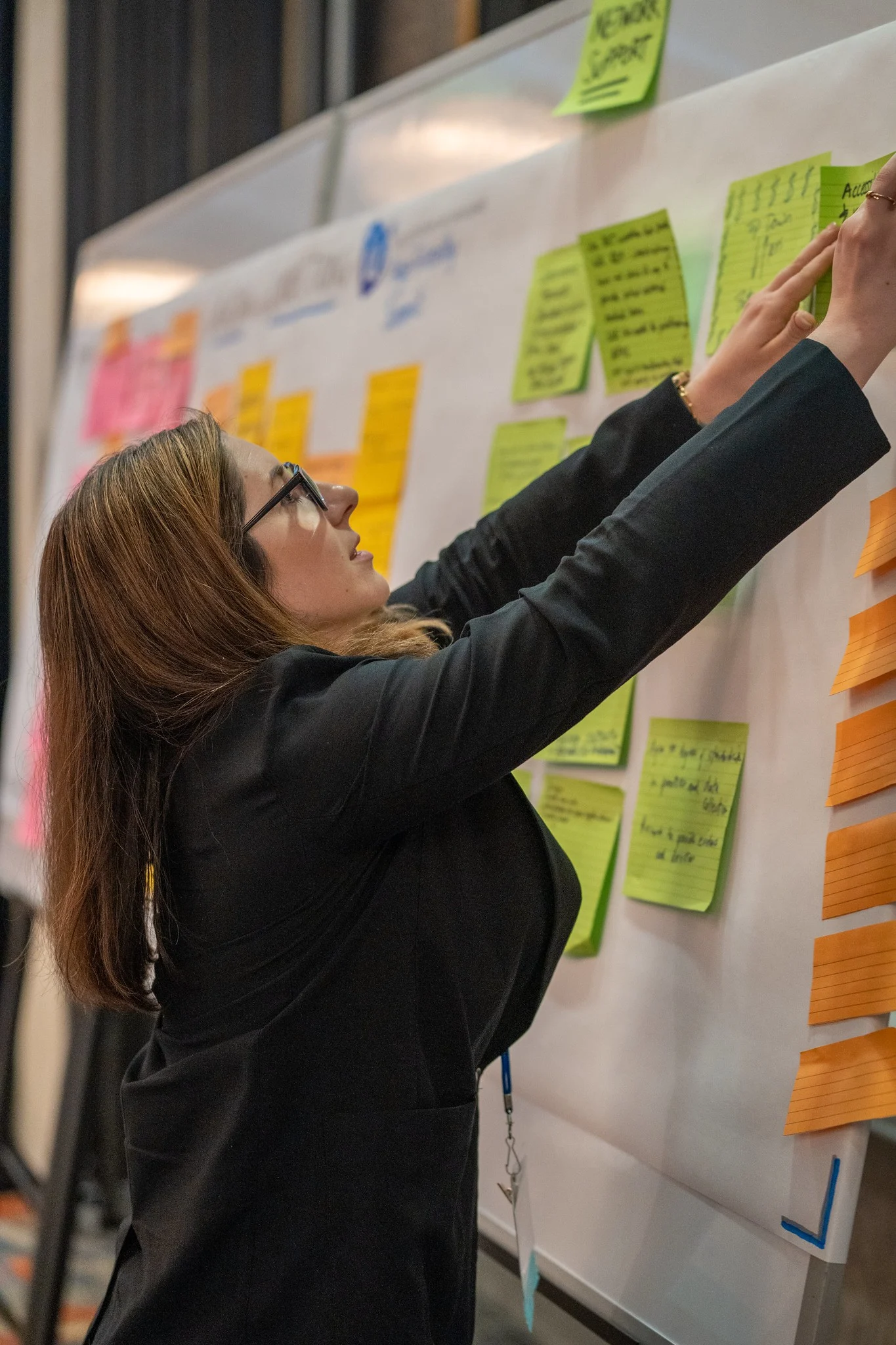
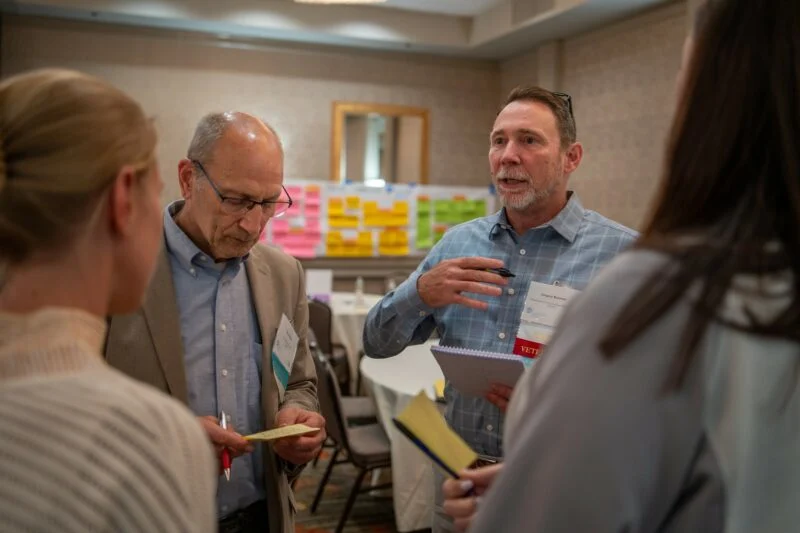
Next came a design session where participants brainstormed approaches on post-it notes under each priority banner, with periodic “wild card” rounds pushing them to think outside the box. A gallery walk let everyone review and upvote the strongest ideas with stickers, narrowing to the most promising, feasible initiatives for each priority.
Ending with accountability, not just enthusiasm
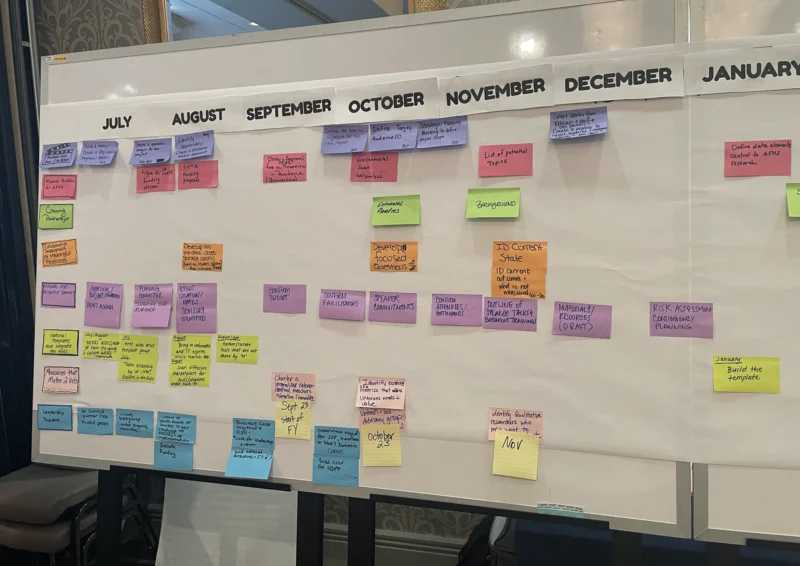
The summit closed with a genuine call to action. Participants formed working groups around the top projects, used facilitator cards to prioritize and build a visual heatmap of their efforts, then mapped tasks onto a calendar timeline and assigned leaders. They left with a shared grasp of the 4Ms, a five-year plan to scale age-friendly practices, and — in one participant’s words — the feeling that “their success is my success.”